
Last updated: November 10, 2026 – By Eddie Brennan
November 2026 update: refreshed the slipping symptom list and the fluid-check-first guidance.
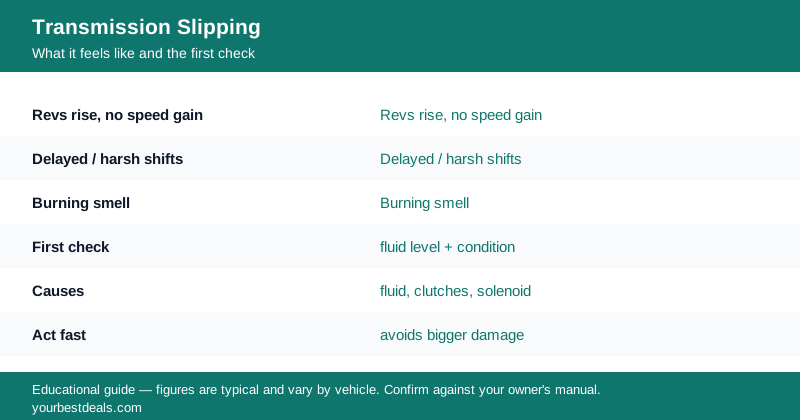
Transmission slipping is when the transmission isn’t holding the power properly – the engine revs climb but the car doesn’t accelerate to match, the way a bicycle feels when the chain skips. You might notice delayed or harsh shifts, the RPM surging or flaring between gears, a burning smell, or a check engine / transmission warning light. The causes range from cheap to expensive: low or burnt transmission fluid (the inexpensive thing to rule out first), worn internal clutches or bands, or a solenoid or valve-body fault. Because the cheapest cause (fluid) and the most expensive (internal wear) can feel the same from the driver’s seat, the first move is always to check the fluid level and condition before assuming the worst.
Transmission work lived next to my bench, not on it, but I saw plenty of slipping complaints come through – and the pattern was always the same. Check the fluid first. It’s the one cause you can fix for the price of a quart, and skipping that check is how people get talked into a rebuild they might not have needed.
What slipping feels like
The classic sensation is the engine RPM rising without a matching increase in speed – you press the gas, the tachometer climbs, but the car doesn’t pull the way it should, as if the power is “slipping” instead of transferring to the wheels. Other forms: the transmission shifting later than it used to or with a hard jolt, the RPM flaring or surging as it changes gears, the car feeling like it briefly falls out of gear, or hesitation when you accelerate. On a manual transmission, slipping specifically shows up as the engine revving but the car not accelerating under load (often a worn clutch), especially noticeable going uphill or accelerating hard. A burning smell can accompany slipping when fluid is overheating or clutches are wearing.
The causes, cheap to expensive
Low or burnt fluid (the cheap one to rule out first). Automatic transmissions rely on fluid pressure to transfer power and engage clutches, so low fluid (from a leak) or old, burnt, degraded fluid can cause slipping. Checking the level and condition (bright red and not burnt-smelling is good; dark brown and burnt is bad) is cheap and sometimes the whole fix – topping up a low level or doing a fluid service can resolve slipping caught early. See our transmission guides and fluid change cost guide.
A solenoid or valve-body fault. Electronic shift solenoids and the valve body control fluid pressure and gear engagement; a failed solenoid or a worn valve body can cause slipping or erratic shifts. This is a mid-range repair and often sets a trouble code, so a scan helps identify it.
Worn internal clutches or bands (the expensive one). The clutches and bands inside the transmission that engage each gear wear out, especially with high mileage, neglected fluid, or hard use. When they’re worn, they slip under load. This is the cause that leads to a rebuild or replacement – see our transmission repair and rebuild cost guide.
Shop Talk
Before you let anyone quote you a rebuild, check the transmission fluid – level and condition. It’s the cheapest possible cause of slipping and the one most worth ruling out first, because a low level (usually from a leak) or badly degraded fluid can cause exactly the slipping that looks like internal failure. Pull the dipstick if your car has one (many newer cars don’t, which means a shop check), and look at the fluid: healthy automatic transmission fluid is clear and red and smells faintly sweet or neutral; fluid that’s dark brown or black and smells burnt tells you the transmission has been overheating and the clutches are likely already worn. If the level is simply low, find and fix the leak and top it up – the slipping may stop. One important caution, though: if the fluid is badly burnt and the transmission is high-mileage and already slipping, a fluid change is not a guaranteed cure and occasionally a fresh fluid service on a very neglected, worn transmission can actually make shifting worse by changing the friction characteristics the worn clutches had adapted to. So check the fluid first because it’s cheap and sometimes the answer, but go in with realistic expectations on a high-mileage unit that’s been slipping a while. And don’t ignore slipping – driving a slipping transmission accelerates the internal wear and can turn a solenoid or fluid issue into a full rebuild.
What Gets Misdiagnosed
The expensive mistake is going straight to “it needs a rebuild” without checking the fluid. Low fluid from a leak, or old burnt fluid, can cause slipping that mimics internal failure – and that’s a cheap fix compared to a rebuild. Any honest diagnosis starts with the fluid level and condition and a scan for codes, not with a rebuild quote.
The other is confusing engine problems with transmission slipping. A misfire, low power, or a slipping serpentine belt can feel like the car isn’t pulling, which people sometimes read as the transmission. Confirming the RPM-climbs-without-speed pattern (and checking for engine codes) separates a true transmission slip from an engine-side power loss.
The Real Number
Slipping is the engine revving without matching acceleration, often with delayed or flaring shifts, a burning smell, or a warning light. The causes run from cheap (low or burnt fluid) to expensive (worn internal clutches, a rebuild), so check the fluid level and condition first – it’s the one you can sometimes fix for the price of a service. Don’t keep driving a slipping transmission, which accelerates the wear, and don’t accept a rebuild quote before the fluid and codes have been checked. For costs, see our transmission repair and rebuild cost guide.
Frequently Asked Questions
What does a slipping transmission feel like?
A slipping transmission most characteristically feels like the engine RPM rising without a matching increase in vehicle speed – you press the accelerator, the tachometer climbs, but the car doesn’t pull or accelerate the way it should, as though the power is being lost rather than transferred to the wheels (similar to a bicycle chain skipping). Beyond that core sensation, slipping can show up as delayed engagement (a pause before the car moves after shifting into drive or reverse), harsh or late shifts, the RPM flaring or surging as the transmission changes gears, a feeling that the car briefly falls out of gear or hesitates, and sometimes a burning smell if fluid is overheating. On a manual transmission, slipping typically appears as the engine revving but the car failing to accelerate under load, especially noticeable when climbing a hill or accelerating hard, which usually points to a worn clutch. The common thread is a disconnect between engine effort and actual acceleration. If you’re feeling the RPM climb while speed lags, that’s the hallmark of slipping. Because the sensation can stem from a cheap cause (low or burnt fluid) or an expensive one (worn internal parts), feeling it is a prompt to check the fluid and have it diagnosed rather than a diagnosis in itself. For transmission service costs, see our transmission guides.
What causes a transmission to slip?
Transmission slipping is caused by anything that prevents the transmission from fully transferring engine power to the wheels, and the causes range from cheap to expensive: low transmission fluid (usually from a leak), old or burnt fluid, worn internal clutches or bands, a failing shift solenoid or valve body, and on manuals, a worn clutch. In an automatic transmission, fluid does double duty – it transfers power (through the torque converter) and provides the pressure that engages the clutches and bands for each gear – so if the fluid is low or degraded, the transmission can’t build proper pressure and slips. That’s why low or burnt fluid is both a common cause and the cheapest to address. Worn clutches and bands are the internal friction components that engage each gear; with high mileage, neglected fluid, or hard use they wear down and slip under load, which is the serious, rebuild-level cause. Electronic shift solenoids and the valve body regulate fluid flow and gear changes; a failure there can cause slipping or erratic shifting and often sets a diagnostic code. On a manual transmission, slipping is usually a worn clutch disc that can no longer grip fully. Because these causes span a huge cost range but feel similar, proper diagnosis – checking fluid level and condition, scanning for codes – is what identifies which one you have. For rebuild costs, see our transmission repair and rebuild cost guide.
Can low transmission fluid cause slipping?
Yes – low transmission fluid is one of the most common and least expensive causes of slipping, because an automatic transmission relies on fluid pressure to engage its clutches and transfer power, so when the level is low, the transmission can’t build the pressure it needs and the result is slipping, delayed engagement, and erratic shifting. Transmission fluid doesn’t get “used up” the way oil can, so a low level almost always means a leak somewhere (a pan gasket, a seal, a cooler line), and addressing that leak and restoring the correct level can resolve slipping that was caused purely by the low fluid – making it a really cheap fix when caught early. This is exactly why checking the fluid level and condition is the first step in diagnosing any slipping: it’s quick, inexpensive, and sometimes the entire answer. That said, two cautions apply. First, running a transmission low on fluid, even briefly, can cause it to overheat and wear the internal clutches, so a transmission that slipped from low fluid may have sustained some damage if driven that way for a while. Second, if the fluid is not just low but also dark and burnt, that signals the transmission has been overheating and the clutches are likely worn, in which case topping up won’t fully fix it. So low fluid can absolutely cause slipping and is the cheap cause to check first, but confirm both the level and the condition, and fix any leak. For fluid service cost, see our transmission fluid change guide.
Is it safe to drive with a slipping transmission?
Driving with a slipping transmission is not advisable, because continuing to drive while it slips accelerates the internal wear – the slipping generates heat and friction that damages the clutches and bands further – so what might have started as a fluid issue or a minor problem can progress into a full failure requiring a rebuild if you keep driving on it. A slipping transmission is also a safety concern in some situations, because the unpredictable loss of power transfer (the car not accelerating when you expect it to, or shifting harshly) can be dangerous when merging, climbing a hill, or needing to accelerate out of a situation. Beyond the safety angle, the practical and financial reality is that slipping tends to worsen: each time the transmission slips, the friction surfaces wear a little more, which makes it slip more, in a cycle that drives toward failure. So while a mildly slipping transmission may still get you down the road, doing so risks turning a cheaper repair (fluid, a solenoid) into the most expensive one (a rebuild or replacement). The better course is to stop driving it more than necessary, check the fluid, and have it diagnosed promptly – ideally before the slipping becomes severe. If the transmission is slipping badly or you’re seeing warning lights and a burning smell, treat it as urgent and avoid driving it. Catching and addressing slipping early is what keeps it from becoming a rebuild. For rebuild costs if it comes to that, see our transmission repair and rebuild cost guide.
How much does fixing a slipping transmission cost?
The cost of fixing a slipping transmission varies enormously depending on the cause, which is why diagnosis matters so much – it can range from the low cost of a fluid service (if low or degraded fluid is the culprit) to a mid-range solenoid or valve-body repair, up to the major expense of a transmission rebuild or replacement if the internal clutches and bands are worn, so there’s no single figure and the honest answer is that it depends on what’s found. At the inexpensive end, if the slipping is from low fluid (topped up after fixing a leak) or old fluid (a fluid and filter service), the cost is relatively modest and is the best-case scenario. A failed shift solenoid is a moderate repair, more involved than fluid but far less than a rebuild, and the cost depends on whether the solenoid is accessible externally or requires dropping the pan or more. At the expensive end, a rebuild (disassembling the transmission and replacing worn internal components) or a replacement transmission is one of the costliest repairs a car can need, often running well into four figures. This enormous range is exactly why you should never authorize a rebuild without first confirming the fluid level and condition and scanning for codes – the cheap causes must be ruled out first. A slipping transmission caught early, while it’s still a fluid or solenoid issue, is far cheaper to fix than one driven until the clutches are destroyed. For the rebuild-end cost, see our transmission repair and rebuild cost guide; for fluid service, see our fluid change guide.
Will a transmission fluid change fix slipping?
A transmission fluid change may fix slipping if the slipping is caused by low or degraded fluid and the transmission’s internal components aren’t yet significantly worn – but it is not a guaranteed cure, and on a high-mileage transmission that’s been slipping for a while, fresh fluid alone often won’t fix worn clutches, and in some neglected cases can even make shifting feel different (occasionally worse). The logic is this: if the fluid was simply old, oxidized, or low, restoring fresh fluid at the proper level can restore the pressure and friction characteristics the transmission needs, and the slipping stops – a great, inexpensive outcome when the problem was caught before internal damage occurred. However, if the clutches and bands are already worn (the expensive, mechanical cause of slipping), new fluid doesn’t restore worn friction material, so it won’t fix the slip, and there’s a long-debated caution that a fluid change on a very neglected, high-mileage transmission can sometimes alter the shifting feel because the detergents and fresh friction modifiers change how the worn components grab. That doesn’t mean you should avoid fluid changes – keeping fluid fresh is key preventive maintenance – but it means a fluid change is worth trying as the cheap first step on a transmission that’s slipping, with realistic expectations that it’s a potential fix for a fluid-caused slip and not a magic repair for worn internals. So try the fluid service first (it’s cheap and sometimes the answer), but understand it may reveal that the real problem is mechanical. For fluid service cost, see our transmission fluid change guide.
Should I rebuild or replace a slipping transmission?
Whether to rebuild or replace a slipping transmission (once it’s confirmed the internal components are worn, not just a fluid or solenoid issue) depends on the cost of each option for your specific vehicle, the transmission’s condition, the quality and warranty of the available options, and the overall value of your car – and it’s a decision worth making only after a proper diagnosis confirms the transmission actually needs that level of work. A rebuild involves disassembling your existing transmission and replacing the worn clutches, bands, seals, and other failed components, then reassembling it; a replacement means installing a different transmission (remanufactured, used, or new). Rebuilds can be cost-effective and let you keep your original unit, with quality depending heavily on the shop doing the work and the warranty offered. A remanufactured replacement transmission is built to a standard and typically comes with a solid warranty, sometimes making it the more reliable choice, while a used transmission is cheaper but a gamble on an unknown unit’s remaining life. The right call often comes down to comparing the rebuild quote against a reman replacement for your vehicle, factoring in warranty, and weighing that total against what your car is worth – because on an older or lower-value car, a major transmission repair can approach or exceed the car’s value, making replacement of the vehicle itself a consideration. Get the diagnosis confirmed, get comparable quotes, and weigh warranty and the car’s value. For detailed cost comparison, see our rebuild vs replace guide and transmission repair and rebuild cost guide.
Sources
Transmission-slipping symptom and cause information verified against standard transmission-service practice in November 2026. Have a professional confirm the cause before major repairs.
- ASE – National Institute for Automotive Service Excellence
- Cars.com – maintenance and repair resources
- NHTSA – vehicle safety
Related Guides
- Transmission Rebuild or Replace?
- Transmission Repair and Rebuild Cost
- Transmission Fluid Change Cost
- Transmission Replacement Cost
- Transmission Guides

Eddie Brennan is an ASE Master Certified technician who spent 11 years in an independent shop in Columbus, OH, before a back injury moved him into writing. He saw too many slipping complaints head straight for a rebuild quote without anyone checking the fluid first – the one cause you can sometimes fix for the price of a quart. He drives a 2015 Subaru Outback with over 250,000 miles and a 2020 Ford F-150, and takes no referral fees or advertising money from any shop or chain.